Your card number, digit by digit

Your card number follows a pattern.
The first digit gives away the network, the last one checks your typing, and the ones in between lead back to you.
The first digit: the network. A 4 is Visa, a 5 or a 2 is Mastercard, and 34 or 37 is American Express, whose numbers are one digit shorter.
The first 6 to 8 digits: the company that issued your card. When you pay, these tell the payment where to go for approval. Visa and Mastercard moved from six digits to eight in 2022, because six was running out of combinations.
The middle digits: your card. These link the card to your account. To get paid, you only share your sort code and account number, so your card number can stay private.
The last digit: the typo catcher. It’s worked out from all the other digits with a bit of maths from the 1950s. Type one digit wrong or swap two next to each other, and the payment form will almost always spot it before you press pay.
The last four digits: the ones you’re allowed to show off. They appear on receipts and in apps because they’re enough to recognise the card and useless for paying with. If your business has a few team cards, they’re also the quickest way to see which card paid for what.
Card verification value (CVV) is the three-digit code on the back of your card, which works a bit like a short password.
American Express does things its own way and prints four digits on the front.
Shops usually ask for it when nobody can see your card, like an online order or a booking over the phone. They also have to delete it as soon as the payment goes through.
A site that remembers your card can save the number and expiry date, but never the three digits, which is why some sites ask for them again.
The CVV sits outside the magnetic stripe, so a device that copies the stripe comes away without it. An unexpected call or message asking for it is a red flag.
If you think your card details got out, pause the card first and look into it after.
With Ampere, you can pause any card from your account, including the ones you’ve given your team. You can get Ampere cards once your business account is approved and the cards pass their own review. See Ampere cards
Two more sets of digits
The four digits of the date: the card works right up to the last day of the month shown. A new card usually brings a new expiry date and CVV, plus a new number if the old card was lost.
The digits in your head: your PIN, the only detail that’s never printed on the card. Nobody can copy it from your card, as long as it stays off sticky notes and your phone’s notes app.
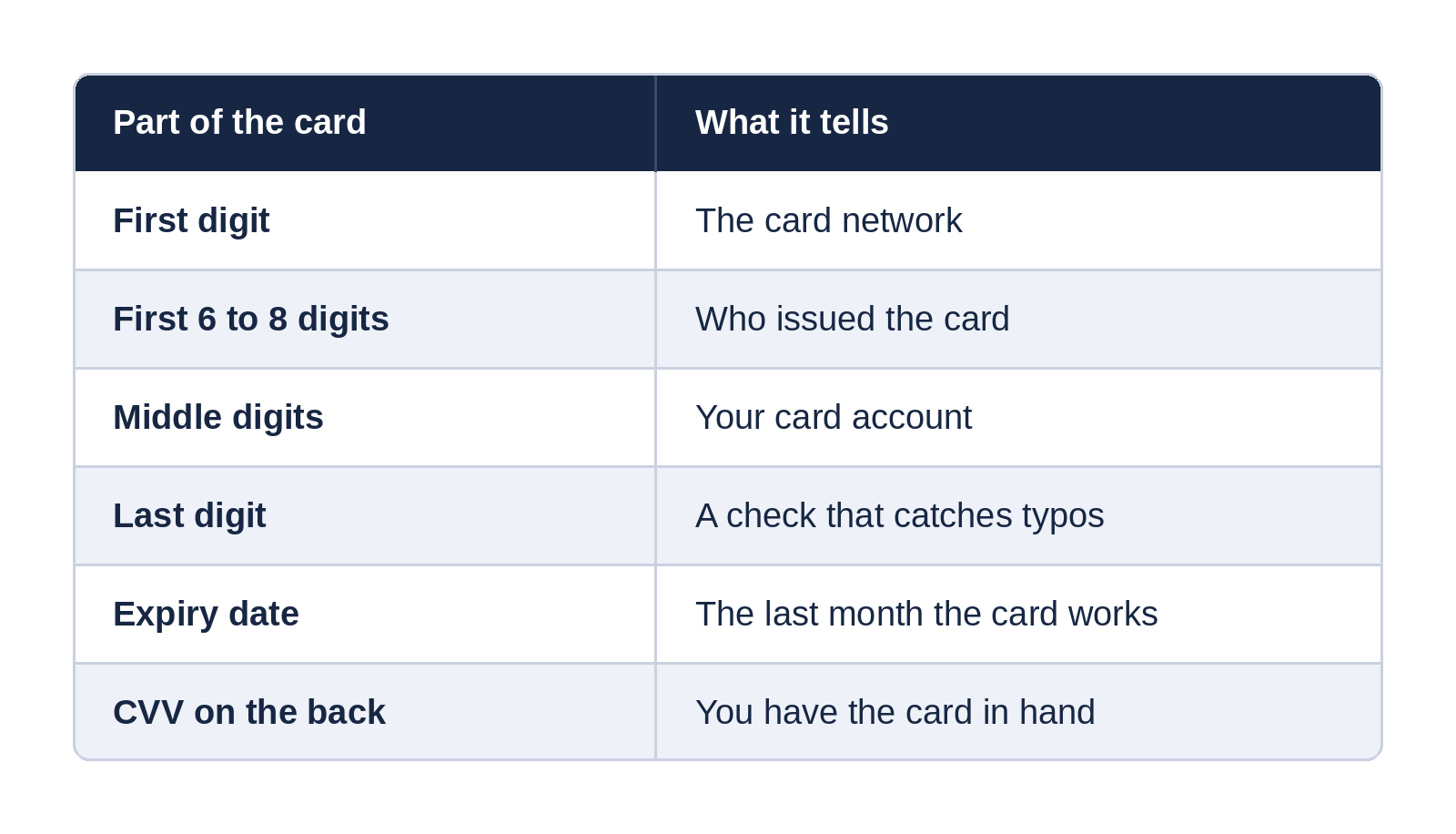
Put together, the long number, the date and the three digits on the back are enough for someone to try paying online with your card, so type them only on pages you trust. When someone just wants to know which card you used, the last four will do.